
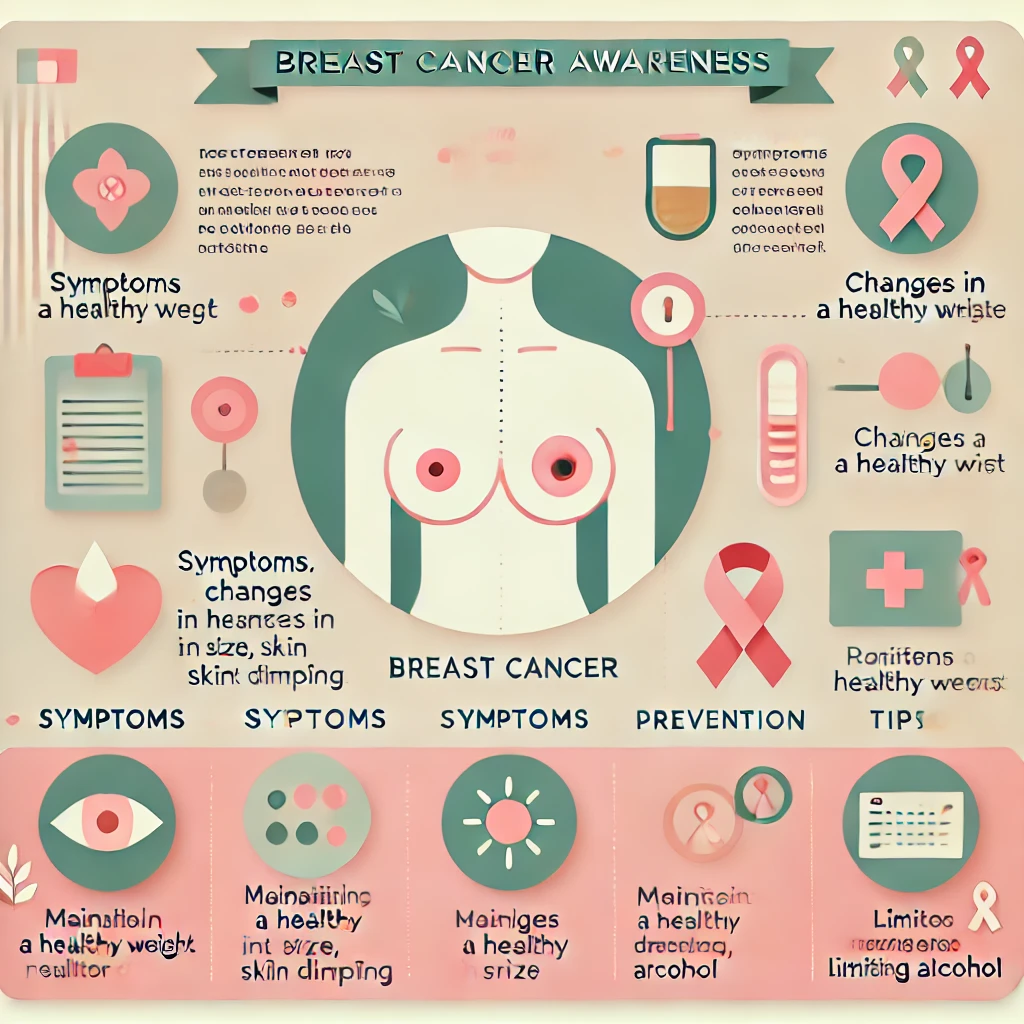
Introduction
Breast cancer is one of the most common cancers affecting women worldwide. Early detection and awareness are crucial for improving survival rates and outcomes. In this blog post, we’ll explore what breast cancer is, its symptoms, diagnosis, treatment options, and prevention strategies.
What is Breast Cancer?
Breast cancer occurs when abnormal cells in the breast grow uncontrollably, forming a tumor. There are different types of breast cancer, including:
- Ductal Carcinoma In Situ (DCIS): A non-invasive cancer where abnormal cells are found in the lining of a breast duct but haven’t spread outside the duct.
- Invasive Ductal Carcinoma (IDC): The most common type, where cancer cells have spread beyond the ducts into other parts of the breast tissue.
- Invasive Lobular Carcinoma (ILC): Cancer that begins in the lobules (glands that produce milk) and spreads to nearby tissues. Understanding the types and risk factors can help in early detection and treatment.
Statistics and Prevalence
Breast cancer is the most frequently diagnosed cancer among women. According to the World Health Organization (WHO), there were 2.3 million women diagnosed with breast cancer and 685,000 deaths globally in 2020. In the United States, approximately 1 in 8 women will develop breast cancer in her lifetime.
Risk Factors and Causes
Several factors can increase the risk of developing breast cancer, including:
- Genetics: Inherited mutations in genes like BRCA1 and BRCA2 can significantly raise the risk.
- Family History: A family history of breast cancer or ovarian cancer can increase risk.
- Age: The risk increases as you age, particularly after the age of 50.
- Hormonal Factors: Early menstruation (before age 12), late menopause (after age 55), and hormone replacement therapy can affect risk.
- Lifestyle Factors: Obesity, lack of physical activity, alcohol consumption, and smoking are linked to higher risk.
Symptoms and Diagnosis
Breast cancer symptoms can vary widely and may include:
- A lump in the breast or underarm.
- Changes in breast size or shape.
- Skin dimpling or puckering.
- Nipple discharge or inversion.
- Redness or scaling of the nipple or breast skin.
Diagnostic Tests and Procedures
- Mammograms: X-ray images of the breast to detect tumors.
- Ultrasound: Uses sound waves to create images of breast tissue.
- Biopsy: Removal of tissue samples for examination under a microscope.
- Magnetic Resonance Imaging (MRI): Detailed images of breast tissue using magnetic fields.
Treatment Options
Treatment for breast cancer depends on the type, stage, and individual factors. Common treatment options include:
- Surgery: This may involve a lumpectomy (removal of the tumor) or mastectomy (removal of the entire breast). Sometimes, lymph nodes are also removed.
- Radiation Therapy: High-energy rays are used to target and kill cancer cells. This is often used after surgery to eliminate any remaining cancer cells.
- Chemotherapy: Anti-cancer drugs are used to kill cancer cells or stop their growth. This can be administered orally or intravenously.
- Hormone Therapy: Used for cancers that are hormone receptor-positive, hormone therapy blocks the body’s natural hormones from fueling cancer growth.
- Targeted Therapy: Drugs that specifically target cancer cell mechanisms, like the HER2 protein in some breast cancers.
- Immunotherapy: Uses the body’s immune system to fight cancer.
Living with Breast Cancer
Living with breast cancer involves managing physical and emotional challenges. Here are some tips:
- Coping Strategies: Finding a support group or counselor can provide emotional relief. Staying active and maintaining a balanced diet can help manage side effects.
- Support Systems: Family, friends, and healthcare professionals are crucial in providing emotional and practical support.
- Managing Side Effects: Common side effects of treatment include fatigue, nausea, and hair loss. Strategies like acupuncture, yoga, and relaxation techniques can help.
- Quality of Life: Focusing on activities that bring joy and maintaining a positive outlook can improve the quality of life during treatment.
Prevention and Early Detection
While there’s no sure way to prevent breast cancer, certain lifestyle changes can reduce the risk:
- Maintain a Healthy Weight: Obesity is linked to an increased risk of breast cancer.
- Exercise Regularly: Physical activity helps maintain a healthy weight and can reduce breast cancer risk.
- Limit Alcohol: Alcohol consumption is linked to an increased risk of breast cancer. Limiting intake can help.
- Avoid Smoking: Smoking is associated with a higher risk of various cancers, including breast cancer.
- Screening Guidelines: Regular screenings, like mammograms, can detect breast cancer early. Women aged 40 and older should discuss screening schedules with their healthcare providers.
- Self-Exams: Regular self-exams help in early detection. Being familiar with the normal look and feel of your breasts can help you notice any changes.
FAQ Section
- What are the early signs of breast cancer?
Early signs can include a new lump in the breast or underarm, changes in breast size or shape, skin dimpling, nipple discharge, and redness or scaling of the breast skin. - How is breast cancer diagnosed?
Diagnosis involves imaging tests like mammograms and ultrasounds, followed by a biopsy to examine tissue samples. MRIs can also provide detailed images of breast tissue. - What are the treatment options for breast cancer?
Treatment options include surgery, radiation therapy, chemotherapy, hormone therapy, targeted therapy, and immunotherapy. The choice of treatment depends on the cancer type, stage, and individual factors. - Can breast cancer be prevented?
While there’s no sure way to prevent breast cancer, risk can be reduced by maintaining a healthy weight, exercising regularly, limiting alcohol intake, avoiding smoking, and having regular screenings. - How can I support a loved one with breast cancer?
Support can include emotional support, helping with daily tasks, accompanying them to appointments, and encouraging them to join support groups. Listening and being there for them is crucial. - What resources are available for breast cancer patients and survivors?
Resources include support groups, counseling services, educational materials from organizations like the American Cancer Society and Breast Cancer Now, and online communities.
Conclusion
Breast cancer is a serious but manageable condition with early detection and appropriate treatment. Staying informed and proactive can make a significant difference in outcomes. Let’s continue to raise awareness and support those affected by breast cancer.