
1. Introduction
Colon cancer is one of the most common cancers diagnosed worldwide — and one of the most preventable. Every year, approximately 150,000 Americans are diagnosed with colorectal cancer, making it the third most common cancer and the second leading cause of cancer death in the United States. Globally, it affects over 1.9 million people annually.
The encouraging truth is that colon cancer is also one of the most treatable cancers when caught early. Thanks to widespread screening programs such as colonoscopy, death rates from colon cancer have declined significantly over the past three decades. When detected at Stage I, the five-year survival rate exceeds 90%.
Yet despite this progress, many people remain unaware of the early signs of colon cancer, the importance of regular screening, or what puts them at risk. This comprehensive guide covers everything you need to know — from causes and symptoms to staging, treatment, and prevention — all grounded in the latest clinical evidence.
2. What Is Colon Cancer?
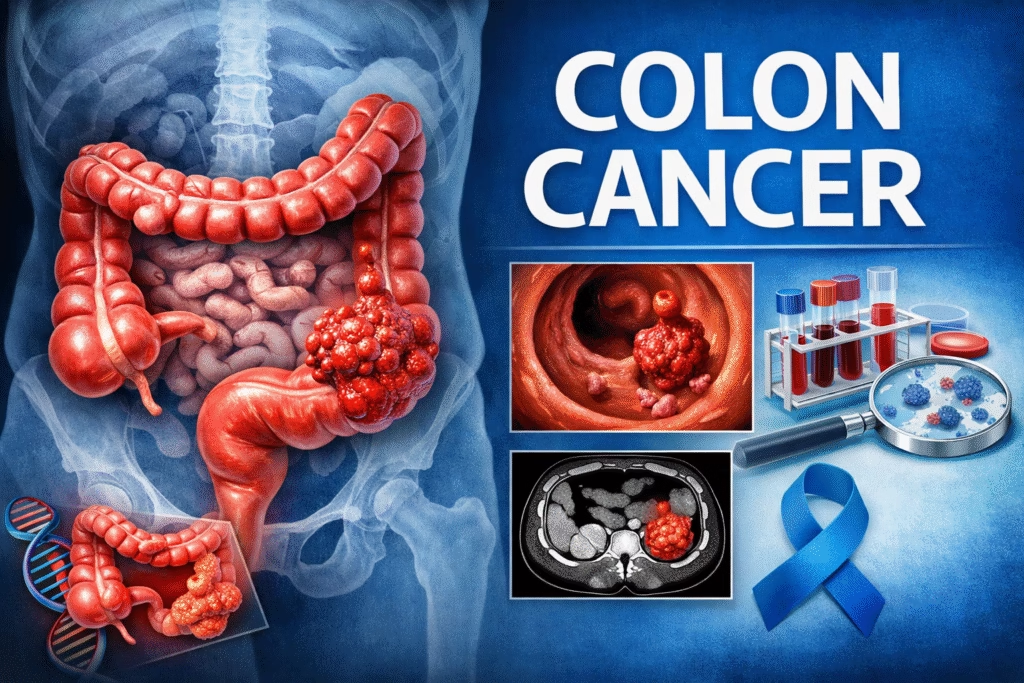
Colon cancer is a type of cancer that originates in the large intestine, also called the colon. The colon is the final section of the digestive tract, responsible for absorbing water and forming solid waste before it passes out of the body.
Cancer in the colon typically begins as small, benign (noncancerous) growths called polyps that form on the inner lining of the colon. Over time — usually many years — some of these polyps can transform into malignant (cancerous) tumors. Not all polyps become cancerous, but certain types, particularly adenomatous polyps (adenomas), carry a higher risk of malignant transformation.
Once a tumor in the colon becomes invasive, cancer cells can penetrate deeper layers of the colon wall, enter nearby lymph nodes, and eventually spread (metastasize) to distant organs such as the liver and lungs. This process is why early detection and removal of polyps in the colon is so critical.
Key facts at a glance:
- Colon cancer is the 3rd most common cancer in both men and women in the U.S.
- About 1 in 23 men and 1 in 25 women will develop colorectal cancer in their lifetime.
- More than 90% of colon cancer cases occur in people over 50, though rates in younger adults are rising.
- Over 50% of colorectal cancers in the U.S. could be prevented through lifestyle changes and regular screening.
3. Colon Cancer vs. Colorectal Cancer
You may hear the terms colon cancer and colorectal cancer used interchangeably. While closely related, they are technically distinct:
- Colon Cancer: Cancer that begins in the colon (large intestine), excluding the rectum.
- Rectal Cancer: Cancer that begins in the rectum, the last 12 cm (approximately 5 inches) of the large intestine.
- Colorectal Cancer: An umbrella term encompassing cancers of both the colon and rectum. Because these two cancers share many features, risk factors, and treatments, they are often grouped together under the term colorectal cancer.
In clinical practice, the distinction matters because rectal cancers may require different treatment approaches, such as a combination of radiation and surgery. For purposes of this article, we focus primarily on cancer of the large intestine but reference colorectal cancer statistics where appropriate.
4. Causes of Colon Cancer
Colon cancer develops when healthy cells in the colon acquire DNA mutations that cause them to grow uncontrollably. Under normal circumstances, the body maintains a careful balance between cell growth and cell death. When this balance is disrupted — due to genetic mutations — abnormal cells multiply and accumulate, forming a polyp or tumor in the colon.
The exact trigger for these DNA mutations is not always identifiable, but several factors are known to contribute:
- Gene mutations: Changes in genes such as APC, KRAS, TP53, and mismatch repair (MMR) genes are commonly found in colorectal tumors. These can be inherited or acquired over a lifetime.
- Inherited syndromes: Conditions such as Lynch syndrome (hereditary nonpolyposis colorectal cancer, or HNPCC) and familial adenomatous polyposis (FAP) dramatically increase cancer risk.
- Chronic inflammation: Long-term inflammation in the colon, as seen in inflammatory bowel disease (IBD), damages colon lining cells over time, increasing mutation risk.
- Diet and lifestyle: A diet high in red and processed meats, low in fiber, combined with obesity, physical inactivity, alcohol use, and smoking, promotes cellular damage and malignant transformation.
5. Risk Factors for Colon Cancer
Understanding colon cancer risk factors empowers you to take proactive steps. Some risks are modifiable (you can change them), while others are non-modifiable (genetic or biological).
Non-Modifiable Risk Factors
Age
The risk of colon cancer increases significantly with age. More than 90% of cases occur in individuals aged 50 and older. However, rates among younger adults (under 50) have been rising at an alarming rate — increasing by roughly 2% per year since the mid-1990s. This trend led the American Cancer Society to lower its recommended screening age from 50 to 45.
Family History and Genetics
Having a first-degree relative (parent, sibling, or child) with colon cancer or colorectal polyps significantly increases your risk. If multiple family members are affected, or if a relative was diagnosed at a young age (under 50), the risk is even higher.
Certain inherited gene mutations account for about 5–10% of all colon cancer cases. These include:
- Lynch Syndrome (HNPCC): The most common hereditary colorectal cancer syndrome. Caused by mutations in mismatch repair genes.
- Familial Adenomatous Polyposis (FAP): Causes hundreds to thousands of polyps to form in the colon and rectum, virtually guaranteeing cancer if untreated.
- MUTYH-associated polyposis (MAP): A less common inherited syndrome also associated with multiple colon polyps.
Personal History
Individuals who have previously had colon cancer, colorectal polyps, or certain other cancers (such as ovarian or uterine cancer) have a higher risk of developing colon cancer again.
Modifiable Risk Factors
Diet
A diet high in red meats (such as beef, pork, and lamb) and processed meats (hot dogs, deli meats) is linked to an increased risk of colorectal cancer. Conversely, diets rich in fruits, vegetables, whole grains, and fiber are associated with lower risk. Low calcium and vitamin D intake may also play a role.
Obesity and Physical Inactivity
Being overweight or obese, particularly with excess abdominal fat, increases colon cancer risk. Regular physical activity is protective — people who exercise regularly have up to a 24% lower risk of developing colon cancer compared to sedentary individuals.
Smoking
Long-term cigarette smoking is associated with a significantly higher risk of developing colorectal cancer. Smoking may also worsen outcomes in people who are already diagnosed.
Alcohol
Heavy alcohol consumption has been linked to an increased risk of colorectal cancer. Even moderate drinking carries some risk. The more alcohol consumed, the higher the risk.
Inflammatory Bowel Disease (IBD)
People with inflammatory bowel disease — including Crohn’s disease and ulcerative colitis — have a substantially elevated risk of developing colon cancer. Prolonged inflammation of the colon lining can lead to genetic changes that trigger cancer. The risk increases with the duration and extent of the disease.
Type 2 Diabetes
People with type 2 diabetes and insulin resistance appear to have an increased risk of developing colorectal cancer, possibly due to elevated insulin-like growth factors that stimulate cell growth.
6. Early Signs and Symptoms of Colon Cancer
One of the most important facts about colon cancer is that early-stage disease often causes no symptoms at all. This is why screening is so vital — cancers found during routine colonoscopy before symptoms develop are far more curable.
When symptoms do occur, the early signs of colon cancer may include:
- Changes in bowel habits: Persistent diarrhea, constipation, or a change in stool consistency lasting more than a few weeks.
- Blood in stool: Rectal bleeding or blood in the stool (which may appear bright red or dark/tarry). This should never be attributed to hemorrhoids without medical evaluation.
- Narrow or pencil-thin stools: A persistent change in stool shape can indicate a blockage or narrowing in the colon.
- Abdominal discomfort: Cramping, gas, bloating, or persistent abdominal pain — especially if new and unexplained.
- Feeling that the bowel doesn’t empty completely: A persistent sensation of incomplete bowel evacuation after going to the bathroom.
- Unexplained fatigue and weakness: Chronic blood loss from the colon can lead to iron-deficiency anemia, causing persistent tiredness and weakness.
- Unexplained weight loss: Significant, unintentional weight loss — particularly if combined with other symptoms — warrants medical investigation.
Important: These symptoms can also be caused by many other, less serious conditions such as hemorrhoids, irritable bowel syndrome, or infections. However, any persistent or unexplained change should be evaluated by a doctor. Do not self-diagnose.
7. Colon Cancer Warning Signs (Red Flag Symptoms)
Certain symptoms require urgent medical attention. These ‘red flag’ warning signs should prompt an immediate call to your doctor or a visit to an emergency department:
| ⚠ Red Flag Warning Signs — See a Doctor Immediately |
| • Bright red blood in the stool or rectal bleeding that does not stop |
| • Dark, tarry stools (may indicate bleeding higher in the digestive tract) |
| • Severe or persistent abdominal pain |
| • A palpable lump or mass in the abdomen |
| • Unexplained weight loss of more than 5% body weight in 6 months |
| • Severe fatigue, pallor, or shortness of breath (signs of significant anemia) |
| • Complete inability to pass gas or have a bowel movement (possible bowel obstruction — a medical emergency) |
8. Colon Cancer Stages
Staging is the process of determining how advanced a cancer is and whether it has spread. Colon cancer is staged from 0 to IV, primarily based on the TNM system — which evaluates the Tumor size/depth (T), whether Nodes are involved (N), and whether the cancer has Metastasized (M) to distant sites. Staging guides treatment decisions and provides prognostic information.
| Stage | Description | 5-Year Survival Rate |
| Stage 0 (Carcinoma in situ) | Cancer cells found only in the innermost lining of the colon. Has not grown into deeper layers. | > 90% |
| Stage I | Cancer has grown into inner layers of the colon wall but has not spread to nearby lymph nodes. | ~90% |
| Stage II | Cancer has grown through the wall of the colon. May have spread to nearby tissue but not to lymph nodes. | ~75–85% |
| Stage III | Cancer has spread to nearby lymph nodes but not to other organs. 3 sub-stages (A, B, C). | ~40–80% |
| Stage IV | Cancer has spread (metastasized) to distant organs — liver, lungs, or peritoneum. | ~10–15% |
Note: Survival rates are statistical averages and do not predict individual outcomes. Many people with Stage III and even Stage IV colon cancer achieve long-term remission with treatment. Always discuss your specific prognosis with your oncologist.
9. How Colon Cancer Is Diagnosed
If colon cancer is suspected based on symptoms or screening, doctors use a combination of tests to confirm the diagnosis, determine the stage, and plan treatment.
Colonoscopy
Colonoscopy is the gold-standard diagnostic and screening test for colon cancer. A flexible, lighted tube (colonoscope) is inserted through the rectum to examine the entire length of the colon. During colonoscopy, doctors can visualize any abnormal areas, remove polyps in the colon, and take biopsies of suspicious tissue — all in a single procedure. Most colon cancers are detected this way.
CT Colonography (Virtual Colonoscopy)
A CT scan of the colon that creates detailed images of the colon’s interior without requiring sedation. If polyps are found, a conventional colonoscopy is still needed for removal. CT scans are also used after diagnosis to determine if cancer has spread to other organs (staging).
Biopsy
When a suspicious mass or polyp is identified, a tissue sample (biopsy) is taken and examined by a pathologist under a microscope. A biopsy is required to confirm a definitive cancer diagnosis. The pathology report reveals the type of cancer cells and how aggressive they are (grade).
Stool Tests
Several non-invasive stool-based tests can detect blood or cancer-related DNA in the stool:
- Fecal Occult Blood Test (FOBT): Detects hidden blood in the stool.
- Fecal Immunochemical Test (FIT): A more sensitive version of FOBT, detecting blood using antibodies.
- Stool DNA Test (Cologuard): Detects both blood and abnormal DNA shed by cancer or pre-cancer cells. Done annually or every 1–3 years.
Positive stool test results require follow-up colonoscopy.
Blood Tests
While no blood test definitively diagnoses colon cancer, the following may provide supporting information:
- Complete Blood Count (CBC): Can detect anemia— a common sign of chronic blood loss from the colon.
- Carcinoembryonic Antigen (CEA): A tumor marker that may be elevated in some colon cancer patients. Used primarily to monitor treatment response and detect recurrence after diagnosis — not for initial screening.
- Liver function tests: Elevated liver enzymes may indicate cancer spread to the liver.
10. Colon Cancer Treatment Options
Treatment for colon cancer depends on the stage, location, and overall health of the patient. A multidisciplinary team — including a colorectal surgeon, medical oncologist, radiation oncologist, and gastroenterologist — typically collaborates on the treatment plan.
Surgery
Surgery is the primary treatment for most stages of colon cancer. The type of surgery depends on the cancer’s stage and location:
- Polypectomy: For very early cancer (Stage 0), the cancer may be removed during colonoscopy by cutting out the polyp.
- Local excision: Small early cancers near the rectum may be removed through the anus without abdominal incision.
- Partial colectomy (hemicolectomy): The section of the colon containing the tumor is removed, along with a margin of healthy tissue and nearby lymph nodes. The remaining colon is reconnected (anastomosis). This is the most common surgical approach for Stages I–III.
- Total colectomy: Rarely needed; the entire colon is removed.
- Colostomy: In some cases, particularly with rectal cancer or emergency surgery, a temporary or permanent opening (stoma) is created in the abdominal wall to divert the bowel. Many colostomies are temporary and later reversed.
Chemotherapy
Chemotherapy uses drugs to kill cancer cells or stop them from growing. For colon cancer, it is used:
- Adjuvant chemotherapy: After surgery in Stage III (and sometimes Stage II high-risk) patients to kill any remaining cancer cells and reduce recurrence risk.
- Neoadjuvant chemotherapy: Before surgery to shrink a tumor.
- Palliative chemotherapy: In Stage IV to slow cancer growth, relieve symptoms, and prolong life.
Common chemotherapy regimens include FOLFOX (folinic acid, fluorouracil, oxaliplatin), FOLFIRI (folinic acid, fluorouracil, irinotecan), and CAPOX (capecitabine, oxaliplatin).
Radiation Therapy
Radiation therapy uses high-energy rays to kill cancer cells. It is used more commonly in rectal cancer than colon cancer, often in combination with chemotherapy (chemoradiation) before surgery to shrink tumors, or after surgery to reduce recurrence risk. For colon cancer specifically, radiation may be considered if the tumor has grown into nearby structures or for palliative control of advanced disease.
Targeted Therapy
Targeted therapy uses drugs that identify and attack specific proteins on cancer cells:
- Bevacizumab (Avastin): Targets VEGF, a protein that promotes blood vessel growth in tumors (anti-angiogenesis).
- Cetuximab (Erbitux) and Panitumumab (Vectibix): Target EGFR receptors on cancer cells. These are most effective in tumors with wild-type (normal) KRAS and NRAS genes.
- Regorafenib and TAS-102: Used in later-line treatment of metastatic colorectal cancer.
Immunotherapy
Immunotherapy harnesses the body’s own immune system to fight cancer. For colon cancer, it is most effective in a subset of patients whose tumors have high microsatellite instability (MSI-H) or mismatch repair deficiency (dMMR). Checkpoint inhibitors approved for this indication include:
- Pembrolizumab (Keytruda): First-line treatment for MSI-H/dMMR metastatic colorectal cancer.
- Nivolumab (Opdivo): Used in MSI-H/dMMR metastatic disease.
All patients with metastatic colorectal cancer should have their tumor tested for MSI/MMR status to determine eligibility for immunotherapy.
11. Colon Cancer Survival Rate
Survival rates give a general sense of prognosis but do not predict any individual’s outcome. They are based on data collected from thousands of patients and reported as the percentage of people alive 5 years after diagnosis. The most widely cited data comes from the American Cancer Society and the National Cancer Institute’s SEER database.
| Overall Colon Cancer Statistics (United States, SEER Database) |
| • Overall 5-year relative survival rate: ~65% |
| • Localized (Stage I–II, not spread beyond colon): ~91% |
| • Regional (Stage III, spread to nearby lymph nodes): ~72% |
| • Distant (Stage IV, spread to remote organs): ~15% |
| • Approximately 60% of all colon cancers are still diagnosed at a localized or regional stage. |
| • Death rates from colorectal cancer have dropped by more than 55% over the past 3 decades, largely due to improved screening and treatment. |
Importantly, younger patients and those with MSI-H tumors who receive immunotherapy tend to have improved outcomes. Clinical trials continue to expand treatment options.
12. Can Colon Cancer Be Prevented?
A significant proportion of colon cancers are preventable. Studies suggest that up to 50–75% of colorectal cancers could be prevented through lifestyle modifications and regular screening. Here are the most evidence-based prevention strategies:
- Get screened regularly: Colonoscopy can detect and remove pre-cancerous polyps before they become cancer. This is the single most powerful prevention tool.
- Eat a high-fiber, plant-rich diet: Diets high in fruits, vegetables, legumes, and whole grains are consistently associated with lower colorectal cancer risk.
- Limit red and processed meats: Aim to consume less than 18 oz of cooked red meat per week, and avoid processed meats such as bacon, sausage, and deli meats.
- Maintain a healthy weight: Achieving and maintaining a healthy BMI reduces risk significantly.
- Exercise regularly: Aim for at least 150 minutes of moderate-intensity aerobic activity per week.
- Don’t smoke: Quitting smoking reduces colorectal cancer risk as well as many other cancers.
- Limit alcohol: If you drink, keep consumption to no more than one drink per day for women and two drinks per day for men.
- Consider aspirin (under medical supervision): Low-dose aspirin use may reduce the risk of colorectal cancer in high-risk individuals, though it also carries bleeding risks. Discuss with your doctor before starting.
- Adequate calcium and vitamin D: Some evidence suggests these nutrients may reduce colorectal cancer risk. Sources include dairy, leafy greens, fish, and sunlight.
13. Colon Cancer Screening Guidelines
Screening means checking for cancer in people who have no symptoms. Colon cancer screening is uniquely powerful because it can prevent cancer by finding and removing pre-cancerous polyps.
| American Cancer Society Colon Cancer Screening Recommendations (2023) |
| • Average-risk adults: Begin screening at age 45. Continue through age 75. |
| • Ages 76–85: Discuss individualized screening with your doctor. |
| • Ages 86+: Routine screening is generally not recommended. |
| COLONOSCOPY (every 10 years) — preferred for detection AND prevention |
| CT Colonography (virtual colonoscopy) — every 5 years |
| Flexible Sigmoidoscopy — every 5 years |
| FIT (Fecal Immunochemical Test) — annually |
| Stool DNA test (Cologuard) — every 1–3 years |
| High-sensitivity guaiac FOBT — annually |
| Higher-risk individuals (family history, Lynch syndrome, IBD, FAP, prior polyps) should begin earlier and screen more frequently. Discuss your personal risk with your gastroenterologist. |
14. Diet for Colon Cancer Prevention
Nutrition plays a significant role in colorectal cancer risk. The following dietary guidance is supported by the American Cancer Society and World Cancer Research Fund:
Foods and Dietary Patterns to Embrace
- Dietary fiber: Aim for 25–35 grams per day. Sources: lentils, black beans, oats, barley, broccoli, apples, and pears. Fiber speeds colon transit, reducing exposure to carcinogens.
- Colorful fruits and vegetables: Rich in antioxidants, polyphenols, and phytochemicals that protect DNA from oxidative damage.
- Whole grains: Brown rice, whole-wheat bread, quinoa. Associated with a 17% lower risk of colorectal cancer versus refined grains.
- Fish (especially oily fish): Salmon, sardines, and mackerel provide omega-3 fatty acids, which may reduce colorectal cancer risk.
- Calcium-rich foods: Low-fat dairy, fortified plant milks, leafy greens. Calcium may help bind and neutralize bile acids in the colon.
- Garlic and onions: Contain sulfur compounds with potential anti-cancer properties.
Foods and Habits to Limit or Avoid
- Red and processed meats: Limit red meat to less than 18 oz/week cooked. Avoid processed meats (bacon, sausage, hot dogs, deli meats) as much as possible.
- Alcohol: Limit or eliminate. Even moderate drinking (1 drink/day) is associated with modest increased risk.
- Refined carbohydrates and sugars: Associated with insulin resistance, a potential cancer promoter.
- Ultra-processed foods: Fast food, snack foods, and ready meals are linked to increased overall cancer risk.
15. When to See a Doctor
You should make an appointment with your doctor if you notice any of the following:
- Blood in your stool or rectal bleeding, even once
- A persistent change in bowel habits lasting more than 2–3 weeks
- Unexplained weight loss
- Persistent abdominal pain, cramping, or bloating
- Unexplained fatigue or weakness
- You are 45 or older and have not had a colonoscopy
- You have a family history of colon cancer or colorectal polyps
- You have been diagnosed with inflammatory bowel disease, Lynch syndrome, or FAP
Do not wait for symptoms to appear. The most important time to see a doctor is before symptoms develop — when cancer is most curable. Regular colon cancer screening is the most powerful step you can take.
16. Frequently Asked Questions (FAQ)
The following questions are designed to answer Google’s ‘People Also Ask’ queries related to colon cancer and are formatted for featured snippet optimization.
| Is colon cancer curable? |
| Yes. Colon cancer is highly curable when diagnosed at an early stage. Stage I and Stage II colon cancer have 5-year survival rates of approximately 90% and 75–85%, respectively. Even Stage III colon cancer is frequently curable with a combination of surgery and chemotherapy, achieving 5-year survival rates between 40–80% depending on sub-stage. Stage IV (metastatic) colon cancer is generally not curable but is treatable, with some patients achieving long-term remission. The most important factor influencing curability is early detection. |
| What is the first symptom of colon cancer? |
| The earliest symptoms of colon cancer are often a persistent change in bowel habits — such as diarrhea, constipation, or narrowing of stools lasting more than a few weeks. Blood in the stool or rectal bleeding is another early warning sign. However, many early colon cancers cause no symptoms at all, which is why regular screening colonoscopy beginning at age 45 is so important. Never dismiss rectal bleeding or a new change in bowel habits without medical evaluation. |
| Can young people get colon cancer? |
| Yes. While colon cancer is more common in adults over 50, rates among young adults (under 50) have been rising significantly — by approximately 2% per year since the 1990s. Young-onset colorectal cancer now accounts for about 10–12% of all new cases. Young people with a family history of colorectal cancer, inflammatory bowel disease, or known genetic syndromes (Lynch syndrome, FAP) are at particularly elevated risk. The American Cancer Society now recommends starting average-risk screening at age 45. |
| Is colon cancer painful? |
| Early colon cancer is often painless. Pain, abdominal cramping, or bloating typically emerge in more advanced stages when the tumor has grown large enough to cause a partial or complete bowel obstruction, or has invaded surrounding structures. The absence of pain should never be taken as reassurance that colon cancer is not present — many people with early-stage colon cancer feel completely well. This underscores the critical importance of routine screening. |
| How fast does colon cancer grow? |
| Colon cancer generally grows slowly. It typically takes 10–15 years for a pre-cancerous adenomatous polyp to develop into invasive cancer. This extended development window is exactly why colonoscopy is so effective — doctors can find and remove polyps before they ever become cancer. However, some aggressive subtypes (such as MSI-H or BRAF-mutated cancers) may grow more rapidly. Once invasive cancer is established, progression to metastatic disease can occur more quickly. |
| What foods should be avoided with colon cancer? |
| People looking to reduce their colon cancer risk — or those managing colon cancer — should limit or avoid: red meats (beef, pork, lamb) especially when charred or processed; processed meats (hot dogs, sausages, bacon, deli meats); alcohol (any amount increases risk); refined sugars and ultra-processed foods; and low-fiber, high-fat diets. Replacing these with plant-based, fiber-rich foods, lean proteins, and healthy fats is consistently associated with better colorectal health outcomes. |
| What is the best screening test for colon cancer? |
| Colonoscopy is widely regarded as the gold-standard screening test for colon cancer. It is the only test that both detects and removes polyps in the colon in a single procedure, effectively preventing cancer. Colonoscopy is recommended every 10 years for average-risk individuals beginning at age 45. Alternative tests — such as FIT, stool DNA testing (Cologuard), or CT colonography — are non-invasive options but require follow-up colonoscopy if results are positive. The best screening test is the one you will actually complete on schedule. |
| What are the survival rates for colon cancer by stage? |
| According to the American Cancer Society and the NCI SEER database, the approximate 5-year relative survival rates for colon cancer by stage are: Stage I (~90%), Stage II (~75–85%), Stage III (~40–80% depending on sub-stage), Stage IV (~10–15%). The overall 5-year survival rate for colorectal cancer is approximately 65% across all stages combined. It is vital to note that these are statistical averages based on historical data, and individual outcomes vary widely based on age, overall health, tumor biology, and treatment. Many patients with advanced colon cancer now live significantly longer due to newer therapies. |
17. Conclusion
Colon cancer is a common but highly preventable and treatable disease. The key message from decades of research is clear: early detection saves lives. When colon cancer is found at an early stage, the chances of cure are excellent — and when pre-cancerous polyps in the colon are found during screening colonoscopy, cancer can be prevented entirely before it ever forms.
If you are 45 or older, talk to your doctor about getting a colonoscopy or another approved colon cancer screening test. If you have a family history of colorectal cancer or any inherited syndromes, discuss starting earlier. Do not wait for symptoms.
Adopting a colon-healthy lifestyle — eating more fiber-rich foods, limiting red and processed meats, exercising regularly, not smoking, and limiting alcohol — can meaningfully reduce your risk. And if you experience any of the symptoms described in this article, seek medical evaluation promptly. Do not dismiss changes in your bowel habits, rectal bleeding, or unexplained weight loss.
Colon cancer does not have to be a death sentence. With awareness, screening, and modern treatment, more people than ever are surviving and thriving after a colon cancer diagnosis.
| Key Takeaways |
| ✓ Colon cancer is the 3rd most common cancer and 2nd leading cancer killer in the U.S. |
| ✓ It is highly curable — 5-year survival exceeds 90% when caught at Stage I. |
| ✓ Regular screening (colonoscopy from age 45) is the single most powerful prevention and detection tool. |
| ✓ Up to 50–75% of colorectal cancers can be prevented through lifestyle changes and screening. |
| ✓ Never ignore rectal bleeding, a persistent change in bowel habits, or unexplained weight loss. |
| ✓ Treatment options include surgery, chemotherapy, targeted therapy, and immunotherapy. |
| ✓ Diet rich in fiber, fruits, and vegetables, combined with exercise and non-smoking, significantly reduces risk. |