
Medically reviewed by Amit Kimothi, BCMAS, Pharmacist | Last updated: March 2026 | 2,400 words
What Is Fatty Liver Disease?
Fatty liver disease — medically called hepatic steatosis — is a condition where fat builds up inside the liver cells. When more than 5% of the liver’s weight is fat, it is considered a fatty liver. There are two main types:
- Non-alcoholic fatty liver disease (NAFLD) — caused by diet, obesity, insulin resistance, or metabolic syndrome, not alcohol. This is by far the most common type.
- Alcoholic fatty liver disease (AFLD) — caused by heavy alcohol consumption.
NAFLD affects roughly 1 in 4 adults worldwide. Most people have no symptoms — it is often discovered accidentally during a routine blood test or ultrasound.
Key fact: Fatty liver disease has no approved medications. Diet and lifestyle change are the only evidence-based treatments — making this one of the most actionable conditions in medicine.
Can Fatty Liver Actually Be Reversed? What the Science Says
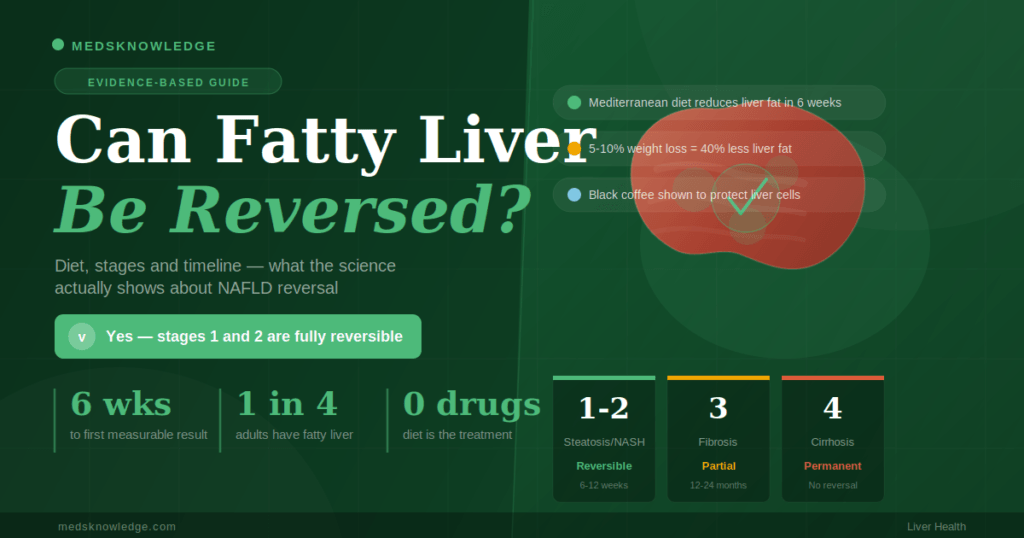
Yes — and this is well established in medical literature. Multiple clinical studies have demonstrated that NAFLD can be significantly reduced or completely reversed through dietary intervention and weight loss.
A landmark study published in the Journal of Hepatology found that losing just 5–10% of body weight reduced liver fat by up to 40% in patients with NAFLD. Another study showed that a low-calorie Mediterranean diet reduced liver fat measurably within 6 weeks.
The critical factor is how far the disease has progressed before you start treatment.
Which Stages of Fatty Liver Are Reversible?
| Stage | What’s Happening | Reversible? | Timeline |
|---|---|---|---|
| Stage 1 — Simple steatosis | Fat in liver cells, no inflammation | ✅ Fully reversible | 6–12 weeks |
| Stage 2 — NASH (inflammation) | Fat + liver cell inflammation | ✅ Reversible in most cases | 3–6 months |
| Stage 3 — Fibrosis | Scar tissue forming | ⚠️ Partially reversible | 12–24 months |
| Stage 4 — Cirrhosis | Advanced scarring | ❌ Not reversible | Management only |
Important: Most people are diagnosed at stage 1 or 2 — when reversal is fully achievable. The key is acting before stage 3 fibrosis takes hold.
How Long Does It Take to Reverse Fatty Liver?
The timeline depends on the stage, how strictly you follow dietary changes, and how much weight you lose:
- 6 weeks: Measurable reduction in liver fat on ultrasound with strict dietary changes
- 3 months: Significant improvement in liver enzymes (ALT, AST) in blood tests
- 6 months: Most stage 1 cases show near-complete resolution
- 12+ months: Stage 2 (NASH) cases with fibrosis begin seeing structural improvement
The most important driver of speed is weight loss. Every 1% of body weight lost correlates with roughly 1% reduction in liver fat percentage.
The Fatty Liver Reversal Diet
There is no single “fatty liver diet” — but the Mediterranean diet has the strongest evidence base for NAFLD reversal. Here is what to focus on:
Foods to Eat More Of
- Olive oil — replaces saturated fats and reduces liver inflammation
- Oily fish (salmon, sardines, mackerel) — omega-3 fatty acids directly reduce liver fat
- Leafy green vegetables — spinach, kale, and broccoli support liver detox pathways
- Walnuts and almonds — healthy fats that also reduce insulin resistance
- Legumes (lentils, chickpeas, beans) — high fibre, low glycaemic index
- Whole grains (oats, brown rice, quinoa) — replace refined carbohydrates
- Coffee (black) — genuinely hepatoprotective; 2–3 cups per day is linked to lower liver fibrosis risk
- Berries (blueberries, strawberries) — antioxidants reduce oxidative stress in liver cells
- Garlic — contains allicin, shown to reduce liver fat in clinical trials
- Turmeric / curcumin — anti-inflammatory with emerging evidence for NAFLD benefit
7-Day Sample Meal Plan
| Day | Breakfast | Lunch | Dinner |
|---|---|---|---|
| Monday | Oat porridge + berries | Lentil soup + whole grain bread | Baked salmon + roasted vegetables |
| Tuesday | Greek yoghurt + walnuts | Chickpea salad + olive oil dressing | Grilled chicken + quinoa |
| Wednesday | Scrambled eggs + spinach | Tuna salad + leafy greens | Lentil curry + brown rice |
| Thursday | Overnight oats + almonds | Vegetable soup + barley | Sardines + roasted broccoli |
| Friday | Smoothie: spinach, banana, flaxseed | Grilled fish tacos + cabbage slaw | Stir-fried tofu + bok choy |
| Saturday | Whole grain toast + avocado | Bean and vegetable stew | Baked cod + sweet potato |
| Sunday | Omelette + mushrooms | Chickpea and roasted pepper wrap | Grilled mackerel + green salad |
Lifestyle Changes That Speed Up Reversal
- Exercise: 150 minutes of moderate aerobic activity per week reduces liver fat independently of weight loss. Both cardio and resistance training are effective.
- Weight loss: Even 5% body weight loss reduces liver fat significantly. A 10% loss often resolves NASH completely.
- Sleep: Poor sleep worsens insulin resistance, which drives fat storage in the liver. Aim for 7–9 hours per night.
- Alcohol: Even moderate alcohol accelerates NAFLD progression — eliminate or minimise it completely during reversal.
- Stress management: Chronic stress raises cortisol, which promotes fat storage around the liver. Regular meditation or breathing exercises help.
Foods to Avoid Completely
- Sugary drinks (soda, fruit juice, energy drinks) — fructose is converted directly to liver fat
- White bread, white rice, pasta — refined carbs spike insulin and drive fat storage
- Fast food and fried food — trans fats directly cause liver inflammation
- Red and processed meat — linked to worsened liver fibrosis
- Alcohol — even one drink per day can counteract reversal progress
- High-fructose corn syrup — found in packaged foods, cereals, and sauces; always read labels
- Excess salt — contributes to fluid retention and liver stress
Warning Signs Your Fatty Liver May Be Getting Worse
Most people with fatty liver have no symptoms. However, if you experience any of the following, consult your doctor immediately as they may indicate progression to NASH or fibrosis:
- Persistent fatigue and weakness
- Pain or discomfort in the upper right abdomen
- Loss of appetite or unexplained weight loss
- Yellowing of the skin or eyes (jaundice)
- Swelling in the legs or abdomen
- Easy bruising
Frequently Asked Questions
Can stage 1 fatty liver be completely reversed?
Yes. Stage 1 (simple steatosis) is fully reversible with dietary changes and modest weight loss. Most patients see complete resolution within 3–6 months of consistent lifestyle change.
How quickly can you reverse fatty liver with diet?
Studies show measurable reductions in liver fat within 6 weeks of following a Mediterranean-style diet with a calorie deficit. Blood tests (ALT, AST) typically normalise within 3 months.
What is the best drink for fatty liver?
Black coffee has the strongest evidence — 2–3 cups per day is associated with lower liver inflammation and reduced fibrosis risk. Green tea also shows benefit. Water is the most important beverage overall. Avoid all sugary drinks and alcohol.
Can you have fatty liver if you are not overweight?
Yes. Lean NAFLD affects up to 20% of NAFLD cases. It can occur in people with a normal BMI due to genetic factors, insulin resistance, rapid weight loss, or a high-sugar diet — particularly in South Asian and East Asian populations.
Is exercise or diet more important for reversing fatty liver?
Both are independently effective — but diet has the larger effect on liver fat reduction. Exercise reduces liver fat even without weight loss, making it a critical companion to dietary change. The combination is significantly more effective than either alone.
What supplements help with fatty liver?
Vitamin E (800 IU/day) has clinical evidence for reducing liver inflammation in non-diabetic NASH patients. Omega-3 fish oil reduces liver fat. Milk thistle (silymarin) is widely used but evidence is mixed. Always consult your doctor before starting supplements.
Does drinking water help fatty liver?
Staying well hydrated supports liver function and helps the liver flush out toxins more efficiently. Replacing sugary drinks with water is one of the single most impactful changes for NAFLD, as it removes a major source of fructose-driven liver fat.
The Bottom Line
Fatty liver disease — particularly in its early stages — is one of the most reversible conditions in modern medicine. With consistent dietary changes, regular exercise, and modest weight loss, most people can achieve significant or complete resolution within 3–12 months. The key is starting now, before progression to irreversible fibrosis or cirrhosis.
If you have been diagnosed with fatty liver, speak with your doctor about monitoring your liver enzymes every 3 months to track your progress.
Sources & References
- Chalasani N, et al. “The diagnosis and management of nonalcoholic fatty liver disease.” Hepatology. 2018.
- Ryan MC, et al. “Mediterranean diet reduces liver steatosis and NASH.” Journal of Hepatology. 2013.
- Vilar-Gomez E, et al. “Weight loss through lifestyle modification significantly reduces features of nonalcoholic steatohepatitis.” Gastroenterology. 2015.
- WHO Global Hepatitis Report, 2024.
- European Association for the Study of the Liver (EASL) Clinical Practice Guidelines. 2023.